The Guardian · US news · Original story
How to escape our collective paralysis in ‘these uncertain times’
Author Natasha Lennard discusses how to disrupt the ‘certainties’ that don’t serve us and how to fight back
At the onset of the Covid pandemic in 2020, journalist Natasha Lennard started noticing a constant thrum of collective apprehension, epitomized in the phrase “in these uncertain times”. The expression acknowledged we didn’t have solutions for many of society’s problems: a globally spreading virus, the rise of the far right and stark “haves v have-nots” inequalities. In the years since, that “uncertainty” hasn’t gone anywhere, risking enabling paralysis – not knowing where to start to fix things and therefore giving up before trying.
In her new book, On Un/Certainty: The Uses of Doubt in Dangerous Times, Lennard, who also was an organizer in the 2011 Occupy Wall Street movement, deconstructs the problematic nature of giving in to uncertainty. She also uses the Austrian-British philosopher Ludwig Wittgenstein’s 1969 book On Certainty to question what is held as “certain” in today’s world, and who gets to make those calls.
Continue reading...
Lex McMenamin · Tue, Oct 13, 2026, 6:00 AM
US news | The Guardian
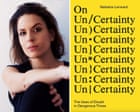
Author Natasha Lennard discusses how to disrupt the ‘certainties’ that don’t serve us and how to fight back
At the onset of the Covid pandemic in 2020, journalist Natasha Lennard started noticing a constant thrum of collective apprehension, epitomized in the phrase “in these uncertain times”. The expression acknowledged we didn’t have solutions for many of society’s problems: a globally spreading virus, the rise of the far right and stark “haves v have-nots” inequalities. In the years since, that “uncertainty” hasn’t gone anywhere, risking enabling paralysis – not knowing where to start to fix things and therefore giving up before trying.
In her new book, On Un/Certainty: The Uses of Doubt in Dangerous Times, Lennard, who also was an organizer in the 2011 Occupy Wall Street movement, deconstructs the problematic nature of giving in to uncertainty. She also uses the Austrian-British philosopher Ludwig Wittgenstein’s 1969 book On Certainty to question what is held as “certain” in today’s world, and who gets to make those calls.
Continue reading...This page shows an excerpt; reporting belongs to the original publisher. Some images or embeds may be omitted compared with the live article.
← More stories · Front page
