The Guardian · US news · Original story
Ban fur farming or risk a new pandemic | Neil Vora
Banning an industry that is brutal to animals could be one of the most consequential public-health measures in decades
Every year, millions of captive animals are gassed or electrocuted and then turned into multithousand-dollar fur coats. Though the industry has shrunk considerably in recent years, it poses a disproportionately large risk to human health. There’s a real chance that the next pandemic could be incubated within the cramped confines of a fur farm, and banning the cruel and senseless practice could be one of the most consequential public-health measures in decades.
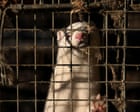
Fur farms are hell. Like other “factory” farms, these facilities confine thousands of animals in close quarters, crammed into tiny wire cages. Often, the animals can barely move around, living out their sad, stationary lives atop a pool of their own waste. Some species, like red foxes, begin chewing the tails off of their young, or even killing them.
Neil Vora is the executive director of the Preventing Pandemics at the Source Coalition and led New York City’s Covid-19 contact tracing program from 2020 to 2021
Continue reading...
Neil Vora · Fri, Apr 24, 2026, 5:00 AM
US news | The Guardian
Banning an industry that is brutal to animals could be one of the most consequential public-health measures in decades
Every year, millions of captive animals are gassed or electrocuted and then turned into multithousand-dollar fur coats. Though the industry has shrunk considerably in recent years, it poses a disproportionately large risk to human health. There’s a real chance that the next pandemic could be incubated within the cramped confines of a fur farm, and banning the cruel and senseless practice could be one of the most consequential public-health measures in decades.
Fur farms are hell. Like other “factory” farms, these facilities confine thousands of animals in close quarters, crammed into tiny wire cages. Often, the animals can barely move around, living out their sad, stationary lives atop a pool of their own waste. Some species, like red foxes, begin chewing the tails off of their young, or even killing them.
Neil Vora is the executive director of the Preventing Pandemics at the Source Coalition and led New York City’s Covid-19 contact tracing program from 2020 to 2021
Continue reading...This page shows an excerpt; reporting belongs to the original publisher. Some images or embeds may be omitted compared with the live article.
← More stories · Front page
