The Guardian · US news · Original story
Israel’s attacks on Lebanon could unravel the US-Iran ceasefire | Mohamad Bazzi
Trump is on the verge of squandering a ceasefire that serves US interests for the sake of an unreliable ally
When Pakistan’s prime minister, Shehbaz Sharif, announced that the US and Iran, along with their allies, had agreed to an immediate ceasefire on Tuesday night, he made clear that the truce applied “everywhere including Lebanon”. But hours later, the Israeli government insisted that the deal did not include halting its attacks on Lebanon, which had become one of the deadliest fronts of the regional war instigated by the joint US-Israeli attack on Iran.
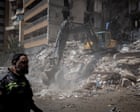
By Wednesday afternoon, Israel had launched its largest and most destructive attack on Lebanon in years, killing at least 300 people and wounding more than 1,100. Dozens of Israeli warplanes dropped bombs on 100 targets across Lebanon within 10 minutes, with the Israeli military claiming it was targeting Hezbollah “command centers” in an operation it called “Eternal Darkness”. But Israeli warplanes leveled several buildings in crowded residential neighborhoods of Beirut, spreading panic in the Lebanese capital and overwhelming hospitals with hundreds of casualties. Israel also continued bombing Lebanon’s infrastructure, destroying the last remaining bridge that linked southern Lebanon to the rest of the country.
Mohamad Bazzi is director of the Center for Near Eastern Studies, and a journalism professor, at New York University
Continue reading...
Mohamad Bazzi · Thu, Apr 9, 2026, 12:41 PM
US news | The Guardian
Trump is on the verge of squandering a ceasefire that serves US interests for the sake of an unreliable ally
When Pakistan’s prime minister, Shehbaz Sharif, announced that the US and Iran, along with their allies, had agreed to an immediate ceasefire on Tuesday night, he made clear that the truce applied “everywhere including Lebanon”. But hours later, the Israeli government insisted that the deal did not include halting its attacks on Lebanon, which had become one of the deadliest fronts of the regional war instigated by the joint US-Israeli attack on Iran.
By Wednesday afternoon, Israel had launched its largest and most destructive attack on Lebanon in years, killing at least 300 people and wounding more than 1,100. Dozens of Israeli warplanes dropped bombs on 100 targets across Lebanon within 10 minutes, with the Israeli military claiming it was targeting Hezbollah “command centers” in an operation it called “Eternal Darkness”. But Israeli warplanes leveled several buildings in crowded residential neighborhoods of Beirut, spreading panic in the Lebanese capital and overwhelming hospitals with hundreds of casualties. Israel also continued bombing Lebanon’s infrastructure, destroying the last remaining bridge that linked southern Lebanon to the rest of the country.
Mohamad Bazzi is director of the Center for Near Eastern Studies, and a journalism professor, at New York University
Continue reading...This page shows an excerpt; reporting belongs to the original publisher. Some images or embeds may be omitted compared with the live article.
← More stories · Front page
