The Guardian · US news · Original story
Abortion pills are saving women’s lives. The right is trying to eliminate them | Moira Donegan
The supreme court has kicked the can down the road after a federal court sought to ban the mailing of mifepristone
An event that ruined lives, degraded the citizenship of hundreds of millions, and permanently lowered the status of American women came and went four years ago, and American politics seems to have largely moved on. When the supreme court overturned Roe v Wade in 2022’s Dobbs decision, it fulfilled a decades-long project of the American right and made real a nightmare for women’s health and equality that feminists had dreaded for a generation. In the months that followed, protests were sporadic and largely moot: popular will, it had long become clear, had little bearing on abortion policy. Women began giving birth to babies they did not want, and dropping out of school and work to care for them – wasting their talents and abandoning their dreams. A flurry of court cases negotiating the impact of the court’s ruling in states across the country made abortion legal, then illegal, then legal again, then illegal again, with women’s ability to control their own lives flickering on and off like a dying lightbulb. Clinics that had served communities for years shut their doors, the world they had helped to build now extinguished by the justices. The new abortion bans are written in such draconian and expansive language that there are often no exceptions for rape or incest and only narrow, inscrutable legal permission for the life of the mother. Because of these bans, women died. Their names blazed across the headlines for a few days, then faded.
The fact is that just four years after Dobbs, abortion has receded from the headlines and from the attention of many American voters. Part of this is because of legal reality: voter referendums on abortion, in states where they were possible, were mostly successful in protecting the right to choose, and those campaigns raised money and awareness about the issue. But that strategy was quickly exhausted; just about every state where a referendum on abortion rights is legally possible has now had one. And it is partly due, too, to the peculiar discursive invisibility of misogyny in American political life. Though we have perhaps never seen a moment when male identity and male grievance have been wielded to greater political effect, feminism is at a comparative nadir. The country is used to seeing women be made to suffer because they are women. America saw the violence that Dobbs did to women’s dignity, dreams, and health, and it largely shrugged its shoulders.
Moira Donegan is a Guardian US columnist
Continue reading...
Moira Donegan · Tue, May 5, 2026, 5:00 AM
US news | The Guardian
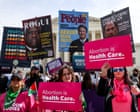
The supreme court has kicked the can down the road after a federal court sought to ban the mailing of mifepristone
An event that ruined lives, degraded the citizenship of hundreds of millions, and permanently lowered the status of American women came and went four years ago, and American politics seems to have largely moved on. When the supreme court overturned Roe v Wade in 2022’s Dobbs decision, it fulfilled a decades-long project of the American right and made real a nightmare for women’s health and equality that feminists had dreaded for a generation. In the months that followed, protests were sporadic and largely moot: popular will, it had long become clear, had little bearing on abortion policy. Women began giving birth to babies they did not want, and dropping out of school and work to care for them – wasting their talents and abandoning their dreams. A flurry of court cases negotiating the impact of the court’s ruling in states across the country made abortion legal, then illegal, then legal again, then illegal again, with women’s ability to control their own lives flickering on and off like a dying lightbulb. Clinics that had served communities for years shut their doors, the world they had helped to build now extinguished by the justices. The new abortion bans are written in such draconian and expansive language that there are often no exceptions for rape or incest and only narrow, inscrutable legal permission for the life of the mother. Because of these bans, women died. Their names blazed across the headlines for a few days, then faded.
The fact is that just four years after Dobbs, abortion has receded from the headlines and from the attention of many American voters. Part of this is because of legal reality: voter referendums on abortion, in states where they were possible, were mostly successful in protecting the right to choose, and those campaigns raised money and awareness about the issue. But that strategy was quickly exhausted; just about every state where a referendum on abortion rights is legally possible has now had one. And it is partly due, too, to the peculiar discursive invisibility of misogyny in American political life. Though we have perhaps never seen a moment when male identity and male grievance have been wielded to greater political effect, feminism is at a comparative nadir. The country is used to seeing women be made to suffer because they are women. America saw the violence that Dobbs did to women’s dignity, dreams, and health, and it largely shrugged its shoulders.
Moira Donegan is a Guardian US columnist
Continue reading...This page shows an excerpt; reporting belongs to the original publisher. Some images or embeds may be omitted compared with the live article.
← More stories · Front page
